Introduction
According to the Cambridge Dictionary, "future-proof" means designing software, computers and the like so that they remain usable in the future, even when technology changes.
In part 1 of this white paper we look at how the market and technology-driven changes in communication and information distribution have placed new demands on printers, publishers and packaging service providers. These demands include pressure on costs and turnaround time, new horizontal and vertical integration requirements and a whole range of new services — all of which affect the product mix companies must deliver to stay profitable.
Unfortunately, many print service providers have not made the internal changes needed to adapt. There are, however, solutions that can be implemented to achieve future-proof growth.

Opportunities in abundance
The Smithers Global Printing Market Forecast estimates that the print market is growing by roughly 1.3% per year and will represent 874 billion dollars in 2024. Over that period, the value share of digital across the whole market is also expected to rise — from 15.7% in 2017 to 19.3% in 2022 — as the next generation of presses drives up productivity and quality to strengthen the competitive position of digital technology.
Whether you are a print service provider looking for growing margins or one that wants to expand its product and service portfolio: it is important to develop a long-term strategy. Where do you start? With the purchase of new hardware? And when it comes to hardware: which print, converting/finishing and embellishment technologies should you consider — offset, toner, inkjet, flexo, gravure, hybrid, custom?
What about workflow? Is there one size that fits all, or do you need to create a workflow that can integrate all your production processes, now and in the future?

Next-generation workflows
Digital technologies have become an ever larger part of daily life and of business processes. Integrated business systems, on premises or in the cloud, are being adopted at a higher pace. In some cases this stems from the desire to gain better insight into operational costs as a result of pressure on margins. Put very simply: efficiency increases margins.
Cober Solutions, a printer in Ontario (Canada), illustrates the problems most print service providers face. According to Erwin Driever, VP Technology: "Cober's digital print activities grew rapidly and we faced a number of challenges, particularly where the volume of short-run orders increased dramatically. With the more traditional finishing methods of a commercial printer, a major bottleneck arose in our finishing area, which negatively affected our production processes, delivery times and customer satisfaction."
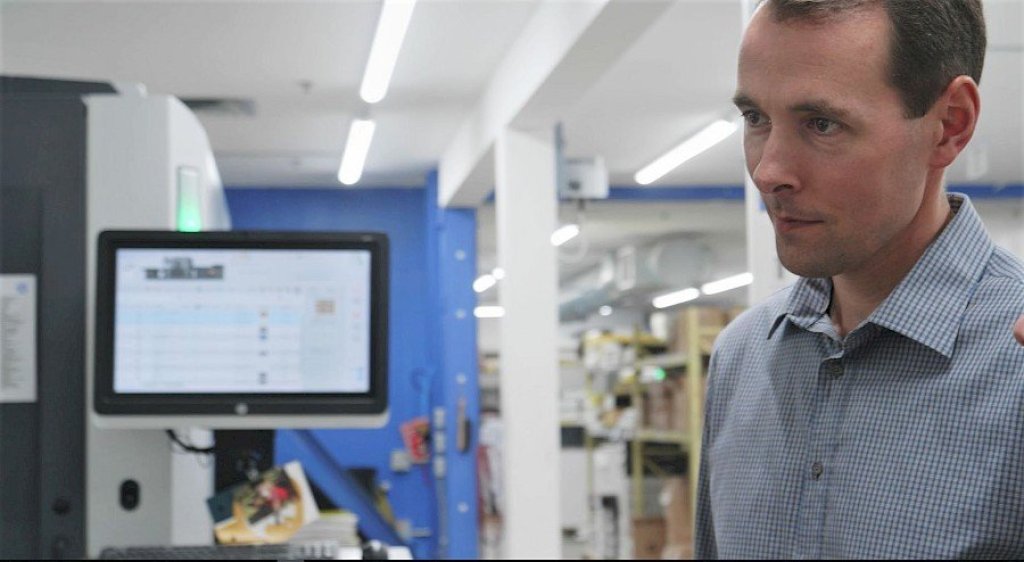
To address this, they integrated Ultimate Impostrip® into their plant workflow to automate their imposition and finishing process. "With the support of Ultimate, Horizon, Standard and HP Indigo, Cober produces on average 1,000–1,200 orders per day, automated from order intake to shipping."
A study by PRIMIR, the association of suppliers to the graphic arts industry, on transformative workflows defined the basic structure for creating efficiency in your organisation.
Developing a business and/or production infrastructure is a challenging process, especially in a changing market. Because printers and converting companies are pressured by customers to speed up turnaround and lower prices, they turn to workflow automation.
Data and content are used throughout the business and production process to automate the entire workflow. This increases efficiency and lowers costs by eliminating as many human touchpoints as possible. In a transformative workflow, production is flexible enough to support channels beyond print as well.
This model represents one of the biggest points of transformation in production that we see across all segments of the graphic arts industry.
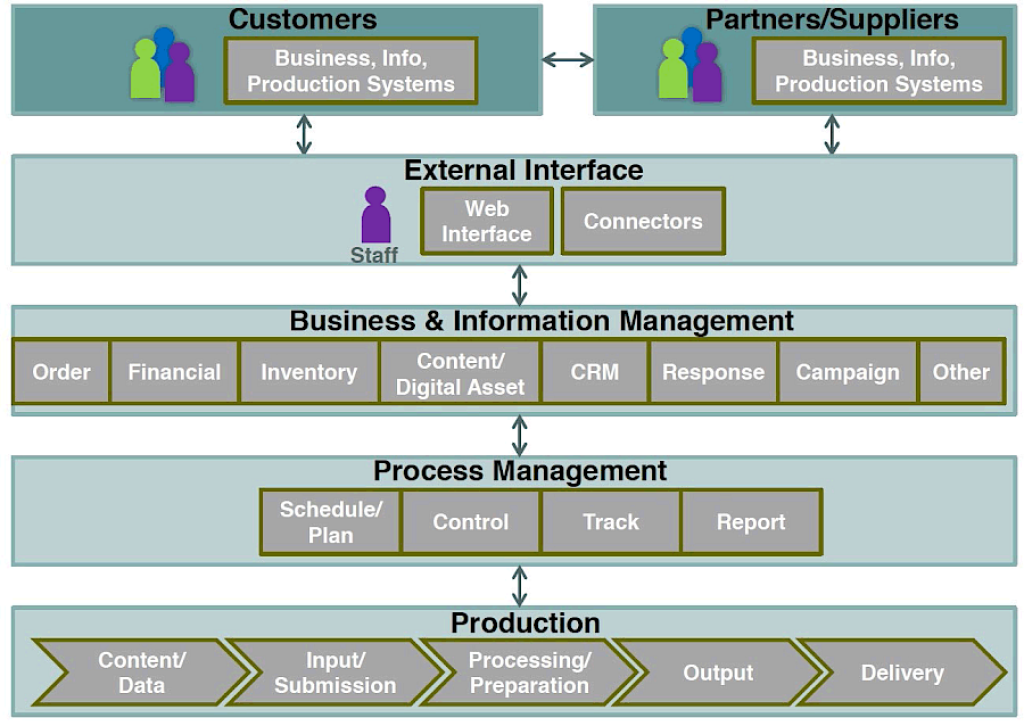
Successfully transformed companies take a much more holistic approach to workflow. It usually starts with examining the core production process, after which layers are added that optimise the workflow further upstream — in many cases all the way to the customer. By leveraging the value each functional layer provides in translating customer input into a predictable production process, companies ensure that job information and content are captured accurately and completely before going into production.
End-to-end process management
Ultimately, your business and production processes are increasingly based on disparate modular systems. The way you connect or integrate them is the key to a holistic collaborative system that supports your needs today and especially those of the future.
At its core, it is all about data, so you need to build a system that can bridge those disparate systems and facilitate data exchange. Where older business systems — including MIS/ERP and W2P systems — were often very proprietary and a challenge for data integration, today's systems usually offer support through APIs (Application Programming Interfaces) and/or XML mapping.
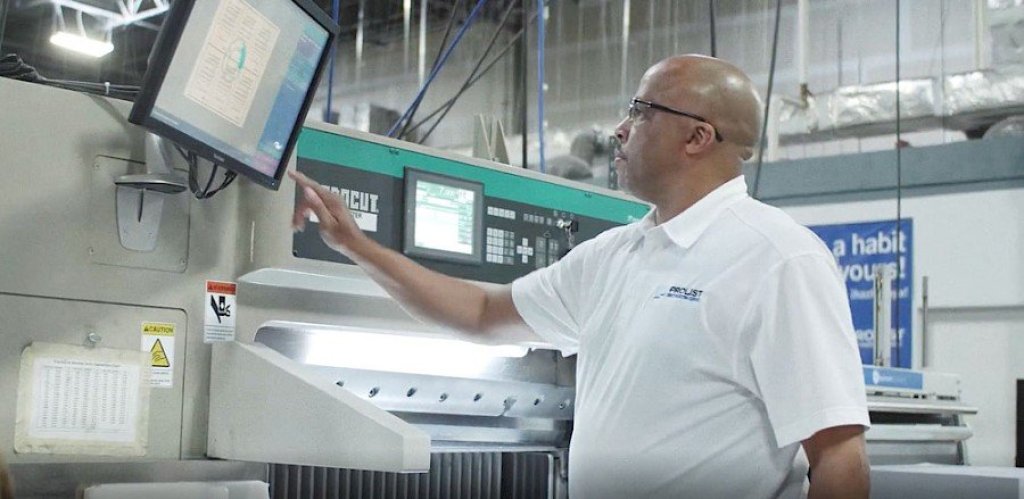
ProList, based in Frederick (Maryland), was founded in 1989 as a data management and data processing company. Over the past 30 years they added direct mail and fulfilment services. Recently they purchased a Konica Minolta AccurioJet KM-1 inkjet press to support their growth.
According to COO David Mawyer, because they had no prepress department, they were looking for a way to automate the incoming files of various page sizes for this new B2+ press (23 × 29 in.). They were introduced to Ultimate Impostrip® by Konica Minolta USA and discovered that they could automate not only the imposition but, through Ultimate Bindery®, the finishing as well.
According to Mawyer: "At operator level it is a matter of placing a file in an active folder. Ultimate Impostrip® connects to Ultimate Bindery®, creates a PDF with JDF instructions and sends it automatically to a hot folder."
Dave Lokos, CEO of ProList, puts it in perspective: "We do not have to do jobs twice. We do not have people cutting things wrong. We cut it right the first time, and exactly. An end-to-end automated workflow is critical in our business, and the Ultimate team has been committed to our success from day one."
So how do you put these concepts into practice and develop a holistic system that integrates your business and production systems as well as your customers? In part 2 of this white paper we will cover concrete examples.
Summary
The introduction of new digital print production technologies combined with changing market demands leads to new requirements, tools and processes. The drive towards Industry 4.0, in which digital technologies connect devices and systems across different disciplines, will stimulate this even faster and further.

Increasingly modular process applications, such as those from Ultimate TechnoGraphics, are becoming the best way to align your workflow with your business needs. This approach uses a suite of applications that can be customised, interconnected and integrated with your existing systems.
Although many tools are available that can automate a process, those same tools can help you build both efficient and inefficient solutions. Ultimately, you still need to understand what you want to achieve and find the most effective way to do it. Working with experienced change agents and following best-of-breed guidance is the best way forward.
About the author: David Zwang
David Zwang travels the world to help companies increase their productivity, margins and market reach. With more than 40 years of industry experience, David specialises in process analysis and strategic business development in publishing, packaging, design, premedia and printing worldwide.
He started in the graphic arts sector as a commercial photographer and has since founded and sold several prepress and printing companies. His experience includes expertise in premedia and cross-media publishing, with an extensive background in digital, offset and flexo printing processes.

Originally by David Zwang for © Ultimate TechnoGraphics Inc. Translated with permission.