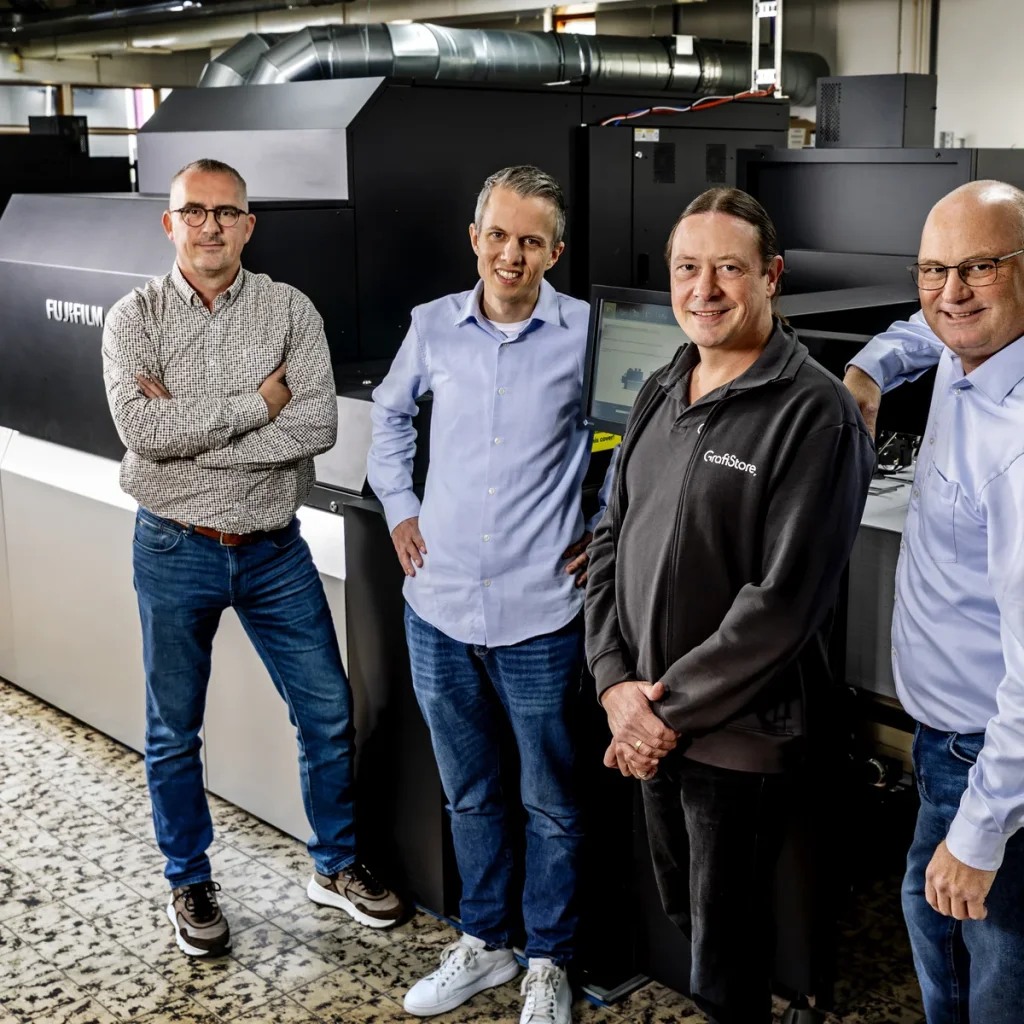
PARTNER CONTRIBUTION — The company name Postermen no longer covers what they actually do. In Deventer, where around 13 people work, it has long been about more than posters. Peter Groen is happy to share how the company set course for more workflow automation.
Peter and his business partner Fatih have a commercial background. The company started about 11 to 12 years ago with A0 posters for outdoor advertising. Groen: "We are a typical attic-room business. We started with a first printer in the bedroom. Soon we were working from the garage with two printers, and three years later the first rented premises of 140 square metres in Apeldoorn was a fact."
Groen: "From the start, Postermen aimed to tap a volume market with low prices and a small margin. Prices have been squeezed over the years. Once, 100 A0 posters easily cost 1,250 euros; now 100 often go over the counter for 150 euros."
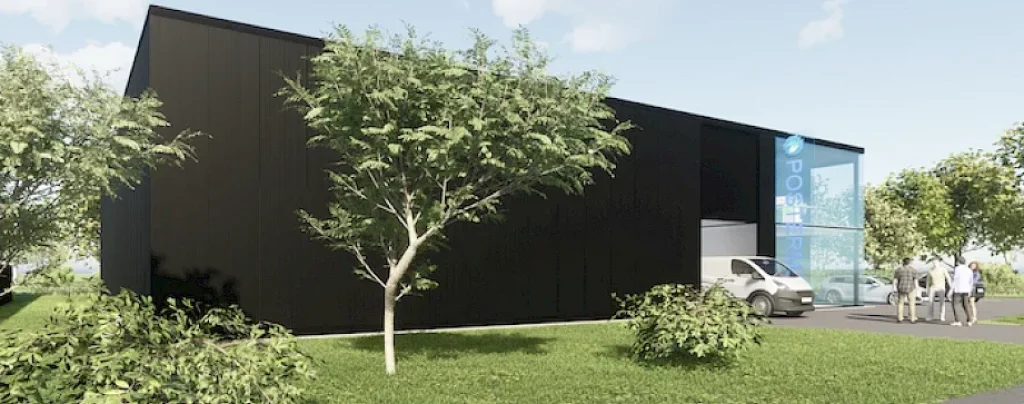
Groen takes a realistic view of this market and of customer needs at scale. Sometimes a first order is not profitable, but the company grew enormously on this model. After renting for a few years they bought premises of 400 square metres, and recently they moved to brand-new premises of 1,000 square metres in Deventer.
Initially mostly focused on capacity
To reach a high volume, the focus was initially mainly on capacity. "With the lowest price you bring in many customers, but you also have to be able to meet demand. With a fairly recent investment in a third Canon Colorado we have been able to expand our capacity considerably." Postermen serves a broad market and carries out, among other things, many poster orders for online print companies in Europe. Groen keeps a sharp eye on dependence on that segment: he does not want it to exceed 25% of his turnover.
Automation needed to keep costs low
Groen makes the bridge to GrafiStore like this: "We now have the space, the machines and the people. The next step was automation, mainly in the workflows, but soon also in the administration. I am mainly a practical person and thought it would all work out. But with hundreds of orders a day we really did need to streamline the order flow. I did not know the term API in any detail, but I had the feeling it was something to solve problems with. So I typed 'API connections' into a search engine, and that is when GrafiStore appeared. It still took a while before we did business — we saw each other at trade fairs, got some demos, but I did not pay it much attention. An intern at our company, also with a commercial-economics background, got to work with it: not afraid to press the wrong buttons or make mistakes."
A thorough approach
Groen on GrafiStore: "There was an immediate click. The patience, the thorough approach and the tangible knowledge convinced us to adopt Enfocus Switch. Our eyes were opened; there was an immediate feeling of 'there is no way back'. We have got a taste for it and will soon take a big step in administrative automation too, with the purchase of a complete system in which everything is linked, from workflows all the way to the invoice."
GrafiStore simply let us experiment with Switch for a while — at no cost — so we could get a feel for it.
Groen: "We still have a lot to do in Switch; the workflows are being expanded as our product range broadens further. GrafiStore helps us with this: they can easily create new workflows or adjust existing ones remotely. For day-to-day matters we are fully self-supporting."
How do you view the market development?
Groen: "That everything is going online is a certainty for our company too. We already saw that with our first steps in the Prindustry shop environment. Our vision is to serve customers with real expertise — otherwise you cannot keep prices low and the necessary volume high. Our customers are knowledgeable and take responsibility for correct file delivery themselves. It is also very important to keep the right focus on purchasing costs. As our range broadens, I often import materials from abroad; on balance that simply makes money. And I always pay attention to the sustainability of those materials — just as with our energy supply: our roof is full of solar panels and our building is heated without gas."
API stands for Application Programming Interface: a 'connection' to exchange data between applications in a standardised way.